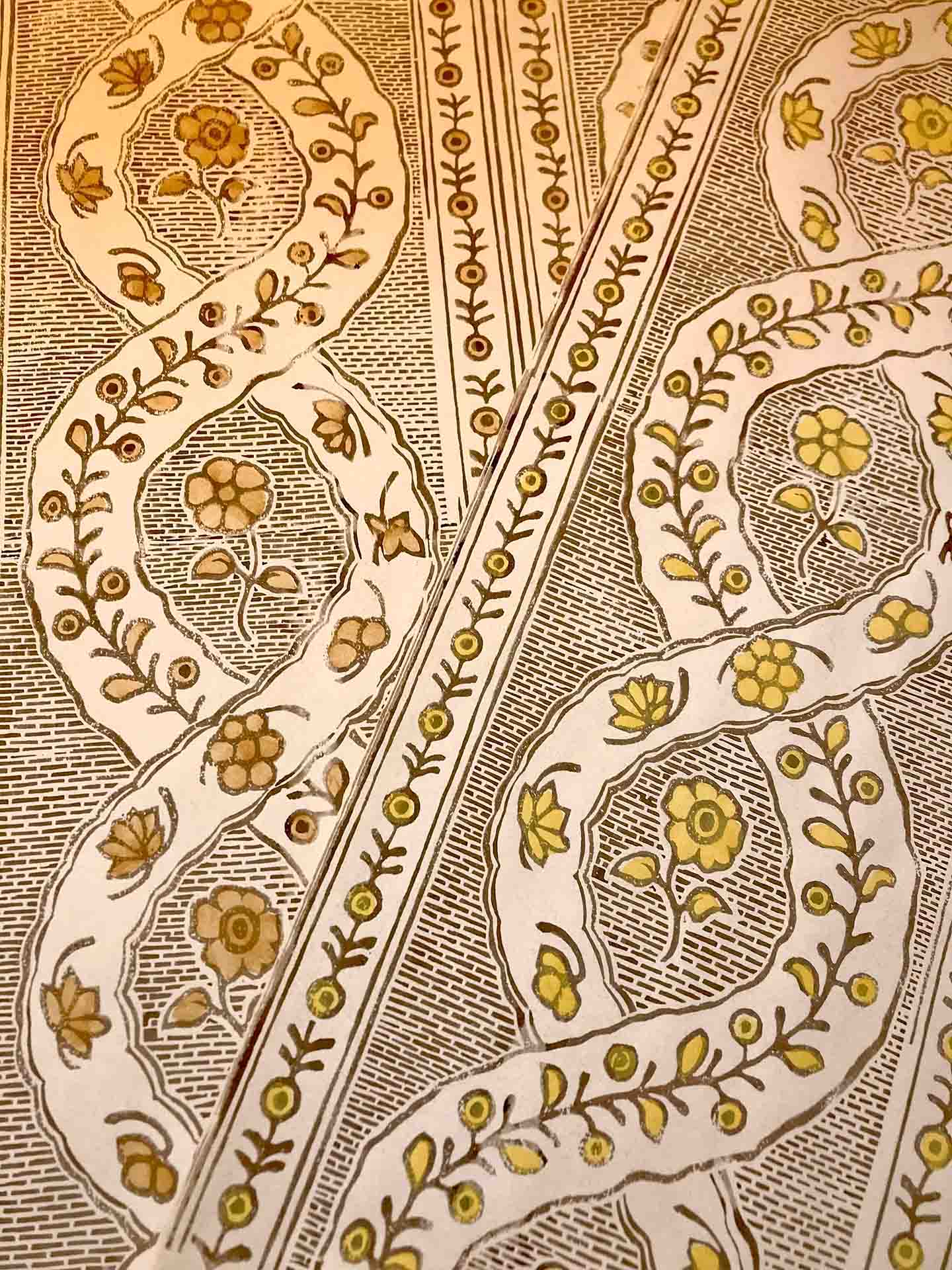
Domino Swag. Circa 1750.
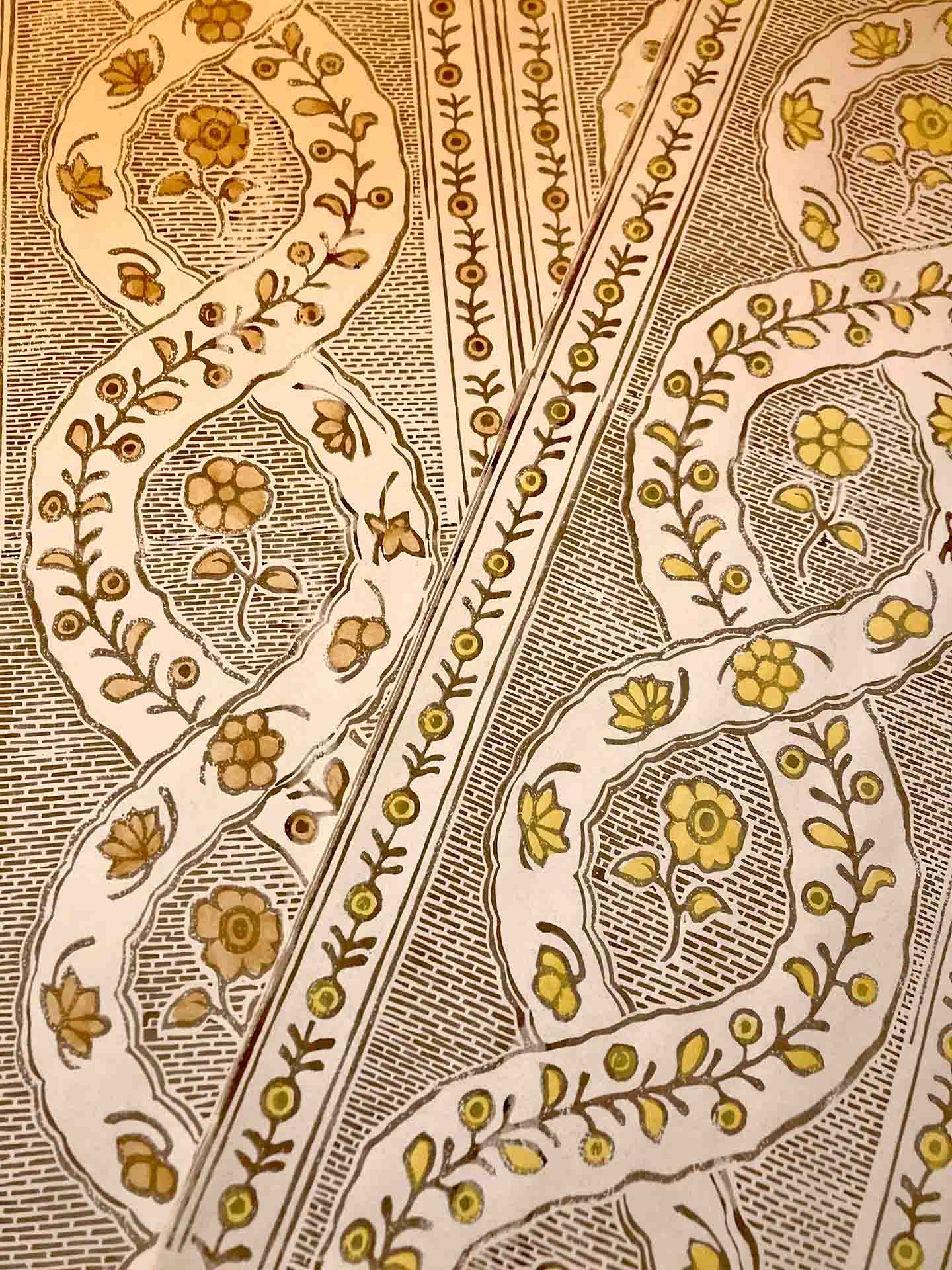

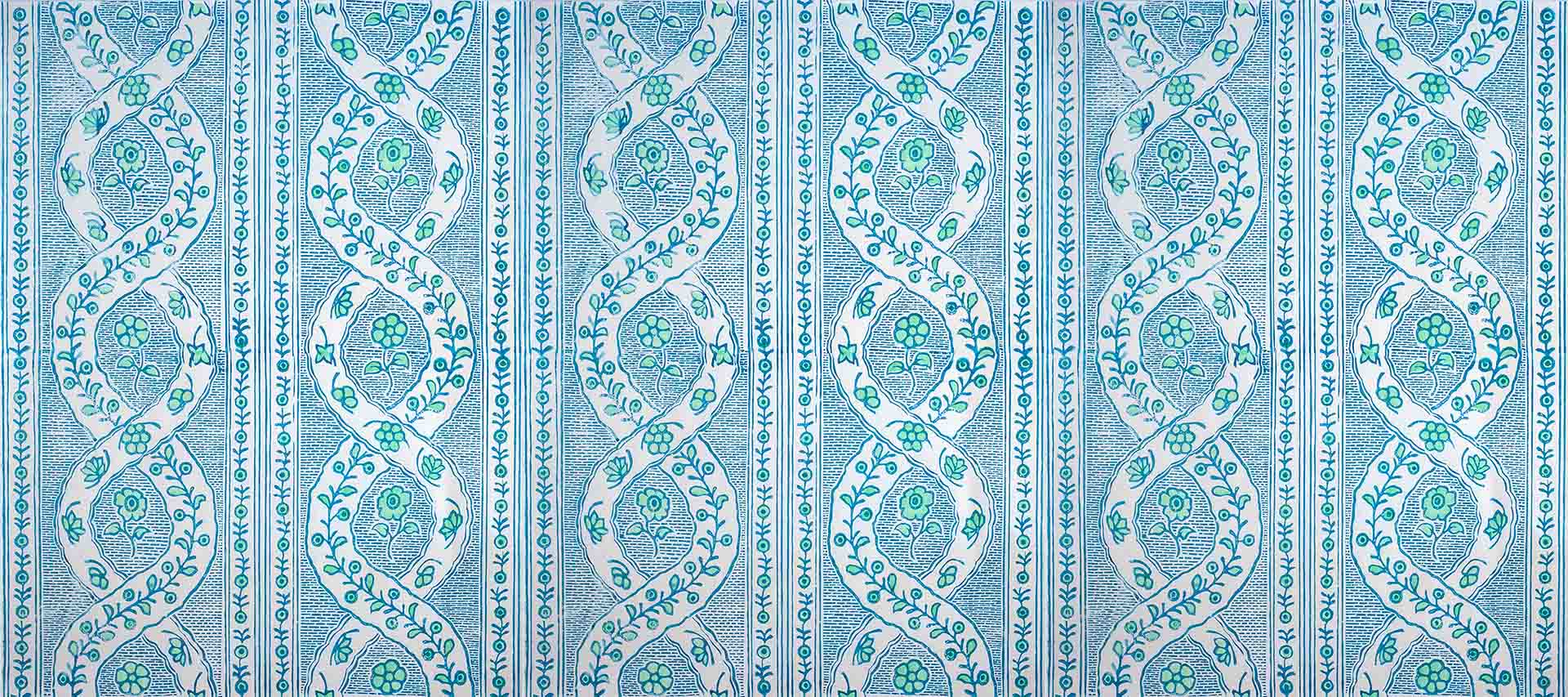
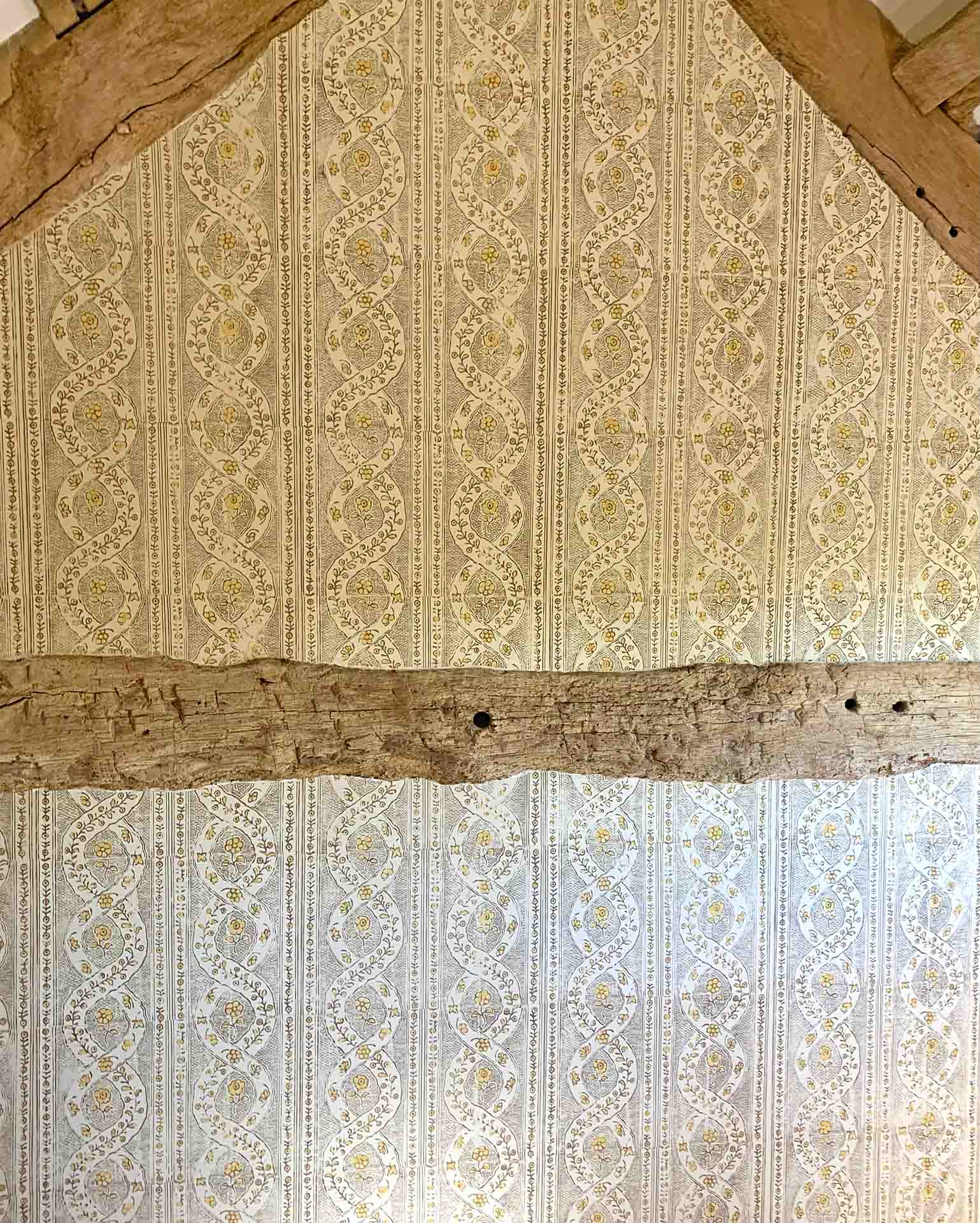
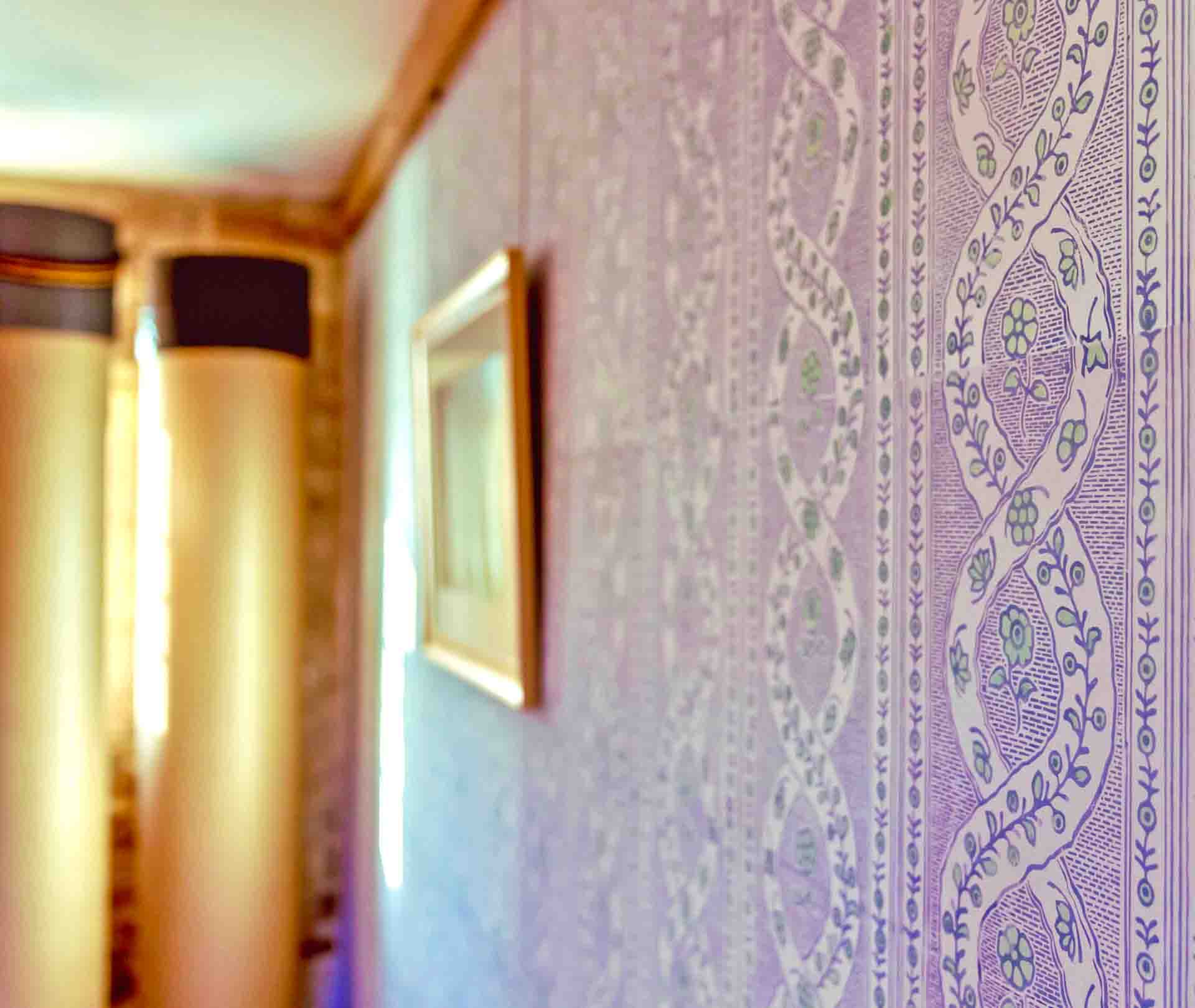
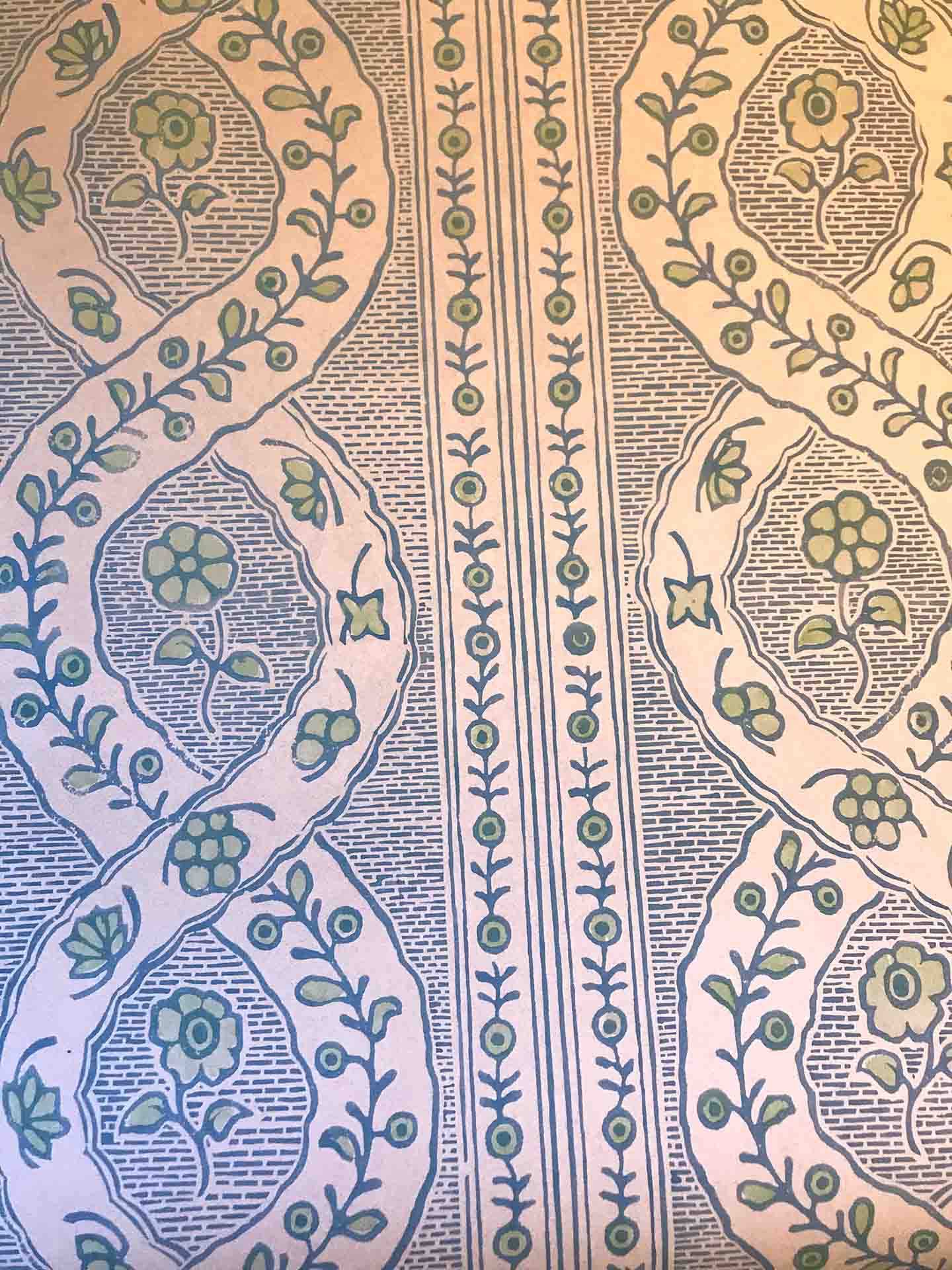
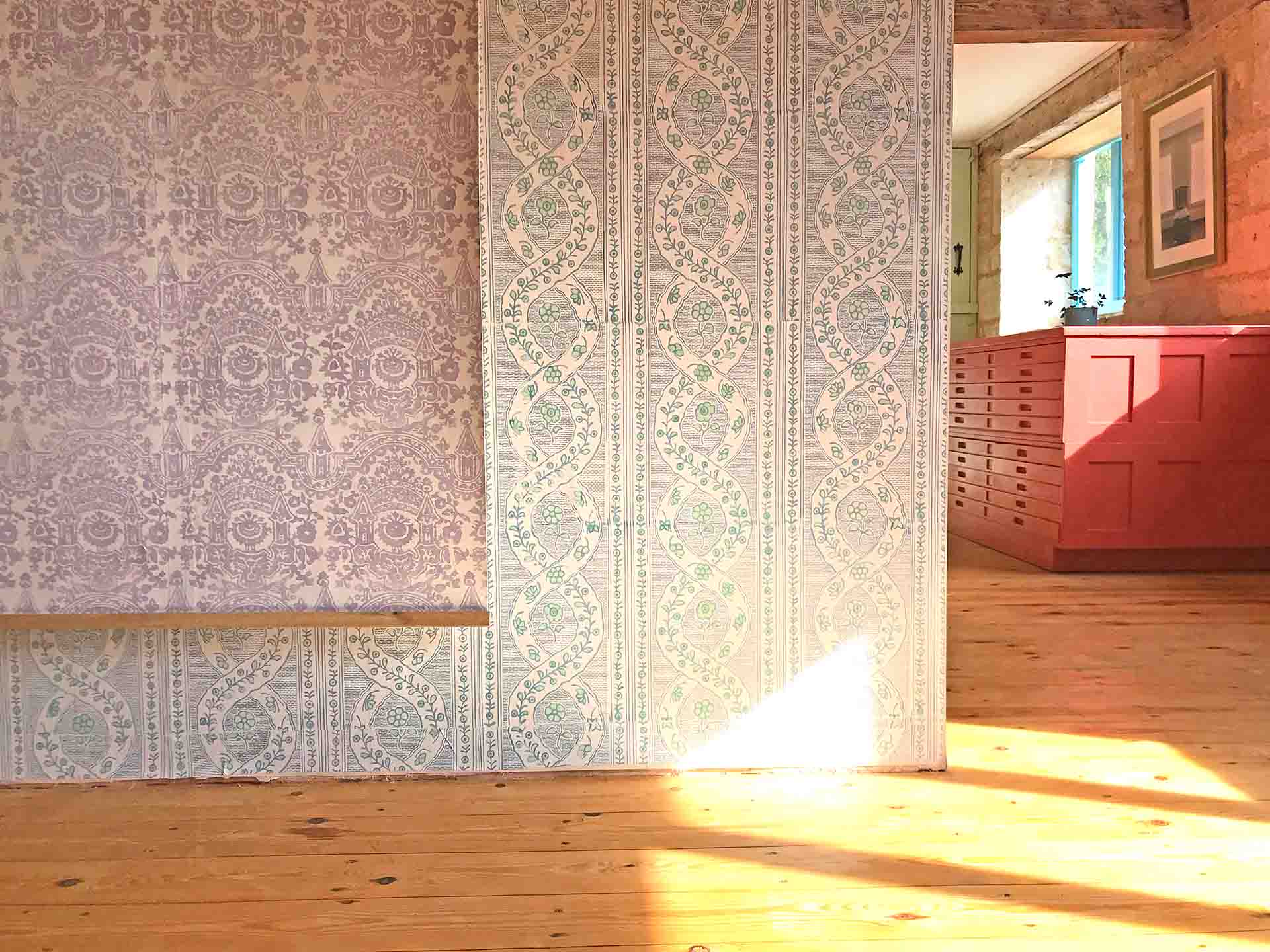
Hand Made Block Printed Wallpaper.
1 block print.
Block printed by hand using hand-carved pear wood blocks, hand-mixed distemper paints, oar press printing on domino paper.
To order a sample please purchase 1 sheet.
All colour schemes are bespoke.
Sheet size: 72 x 54 cm (28⅜ x 21¼ inches)
£150 per sheet = £414per m²
Minimum order of 50 sheets covers 19.4 m² = £7500
Enquire
purchase
An authentic recreation of a circa 1750 Architectural swag pattern, this hand made domino wallpaper exemplifies the sophisticated architectural vocabulary of Georgian design. Produced using traditional block printing and stencilling methods with hand-carved pear wood blocks, hand-cut stencils, and historic distemper paint recipes, each sheet is printed individually on an oar press in the Cotswolds workshop of James Randolph Rogers.
About This Design
This historic wallpaper reproduction recreates an authentic circa 1750 architectural swag pattern using traditional domino paper methods practised by Georgian dominotiers. Domino Swag exemplifies the sophisticated decorative vocabulary of mid-18th-century interiors, when classical architectural motifs—swags, festoons, and drapery—were adapted from grand plasterwork and carved ornament into affordable printed wall coverings. These elegant designs brought neo-Palladian refinement to prosperous households throughout Georgian Britain and colonial America, translating the architectural language of Robert Adam and William Kent into accessible domestic decoration.
The swag motif’s enduring appeal from the 1740s through the 1780s reflected the Georgian fascination with classical antiquity and architectural order. Unlike the smaller sprig patterns reserved for secondary rooms, swag designs were bold statements intended for principal spaces—entrance halls, drawing rooms, and formal dining rooms—where their vertical emphasis and rhythmic repetition complemented panelled wainscoting and elevated ceiling heights characteristic of Georgian architecture on both sides of the Atlantic.
Hand Made Production Method
Each sheet of this bespoke wallpaper is produced entirely by hand using authentic pre-1830s techniques combining block printing and stencilling. The foundational architectural elements are block printed from a single hand-carved pear wood printing block, whilst the decorative infill and highlighting employ two hand-cut stencils—a sophisticated hybrid technique that enabled Georgian dominotiers to achieve complex multi-colour effects economically. This combined methodology represents the technical ingenuity of mid-18th-century wallpaper production, where craftsmen developed innovative approaches to meet growing demand for elaborate designs.
The block is carefully inked with hand-mixed distemper paints formulated according to historic recipes using natural pigments and animal glue binders. Following initial block printing via oar press—applying controlled pressure to transfer the primary design elements onto sheets measuring 72 x 54 cm—the stencils are positioned and stippled to add decorative detail and colour variation. This sheet-by-sheet hand made production method, unchanged since the Georgian period, ensures each length retains the subtle variations and authentic surface quality characteristic of historic domino papers, with the distinctive matt finish that machine-printed reproductions cannot replicate.
Historical Context and Authenticity
Architectural swag patterns flourished across Georgian Britain and colonial America during the mid-18th century, coinciding with the apex of neo-Palladian taste. The popularity of these designs reflected broader cultural currents—the Grand Tour’s influence on aristocratic patronage, the dissemination of architectural pattern books by Batty Langley and William Halfpenny, and the emergence of a confident merchant class in London, Edinburgh, Boston, and Philadelphia seeking to emulate fashionable metropolitan interiors.
This historic wallpaper recreation derives from careful study of a circa 1750 example, maintaining both the technical production methods and the aesthetic sensibilities of the period. Original swag papers discovered in Georgian townhouses and colonial mansions frequently show these designs in formal reception rooms, where their architectural character complemented elaborate cornices, chair rails, and chimney pieces. The commitment to authentic hand made manufacture—employing the original combination of block printing and stencil work—ensures this wallpaper possesses the distinctive surface quality, colour depth, and visual texture characteristic of genuine Georgian domino wallpaper, whether destined for a Bath townhouse, a Cotswolds manor, or a Federal-era residence in New England.
Bespoke Specifications and Ordering
This block printed wallpaper is produced to order on individual sheets measuring 72 x 54 cm (28⅜ x 21¼ inches), reflecting mid-18th-century paper-making dimensions. Pricing is , with a minimum order requirement of Minimum order of 50 sheets covers 19.4 m² = £7500.
All bespoke colour schemes are mixed specifically for each commission to suit your interior requirements. Historic colour palettes for swag patterns typically featured stone grounds with detailing in verditer blue, verdigris green, or terre verte, contrasted with terracotta, umber, or lamp black accents. Alternatively, cream or buff grounds with blue-grey or olive drapery effects created lighter schemes suited to north-facing rooms. Contemporary colour interpretations can be accommodated whilst maintaining period-appropriate distemper paint characteristics and the tonal relationships essential to the design’s architectural impact. Volume orders exceeding 100 sheets receive a 20% discount, making larger projects more economical whilst maintaining uncompromising quality and authenticity.
Get In Touch