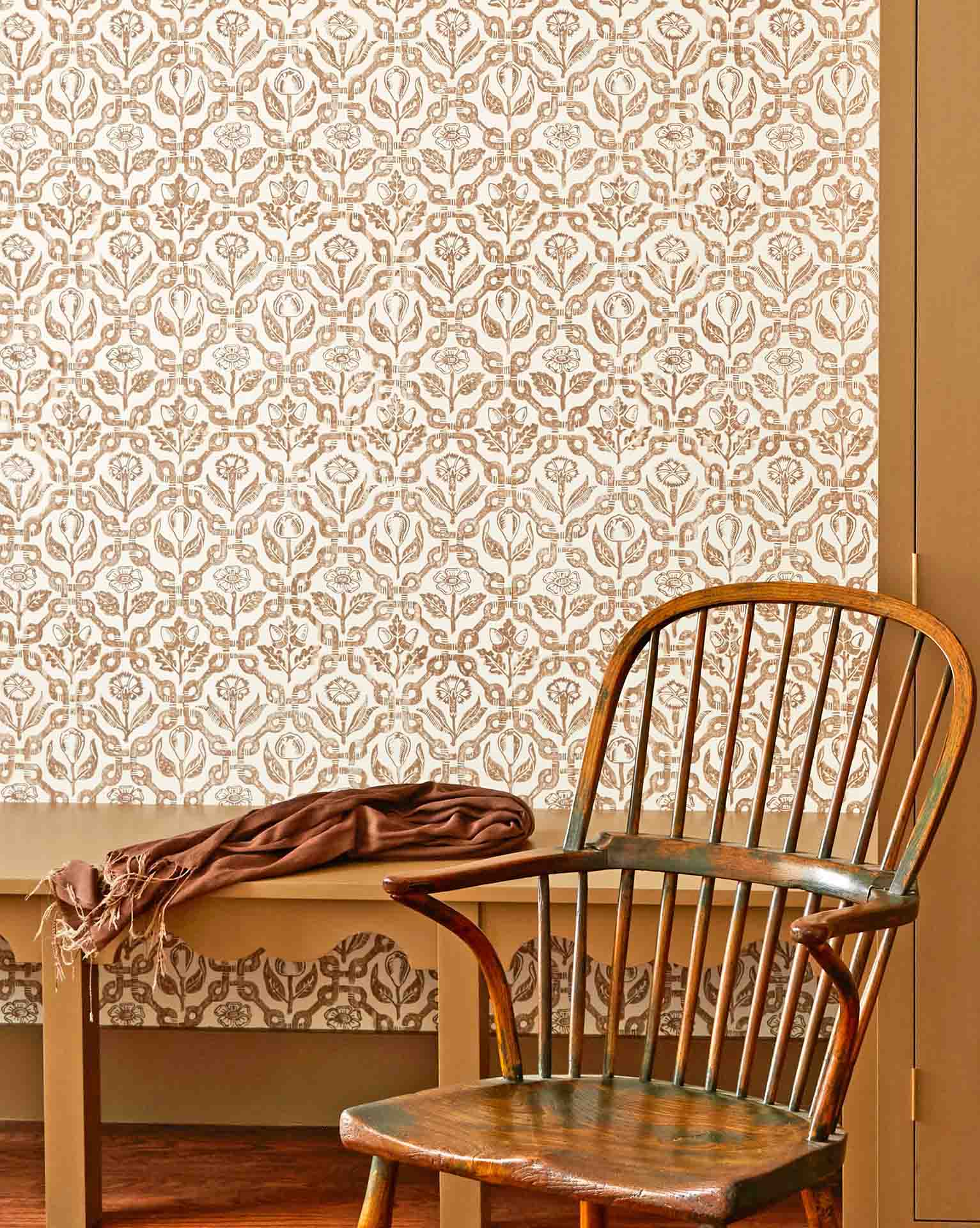
Acorns. Circa 1549.
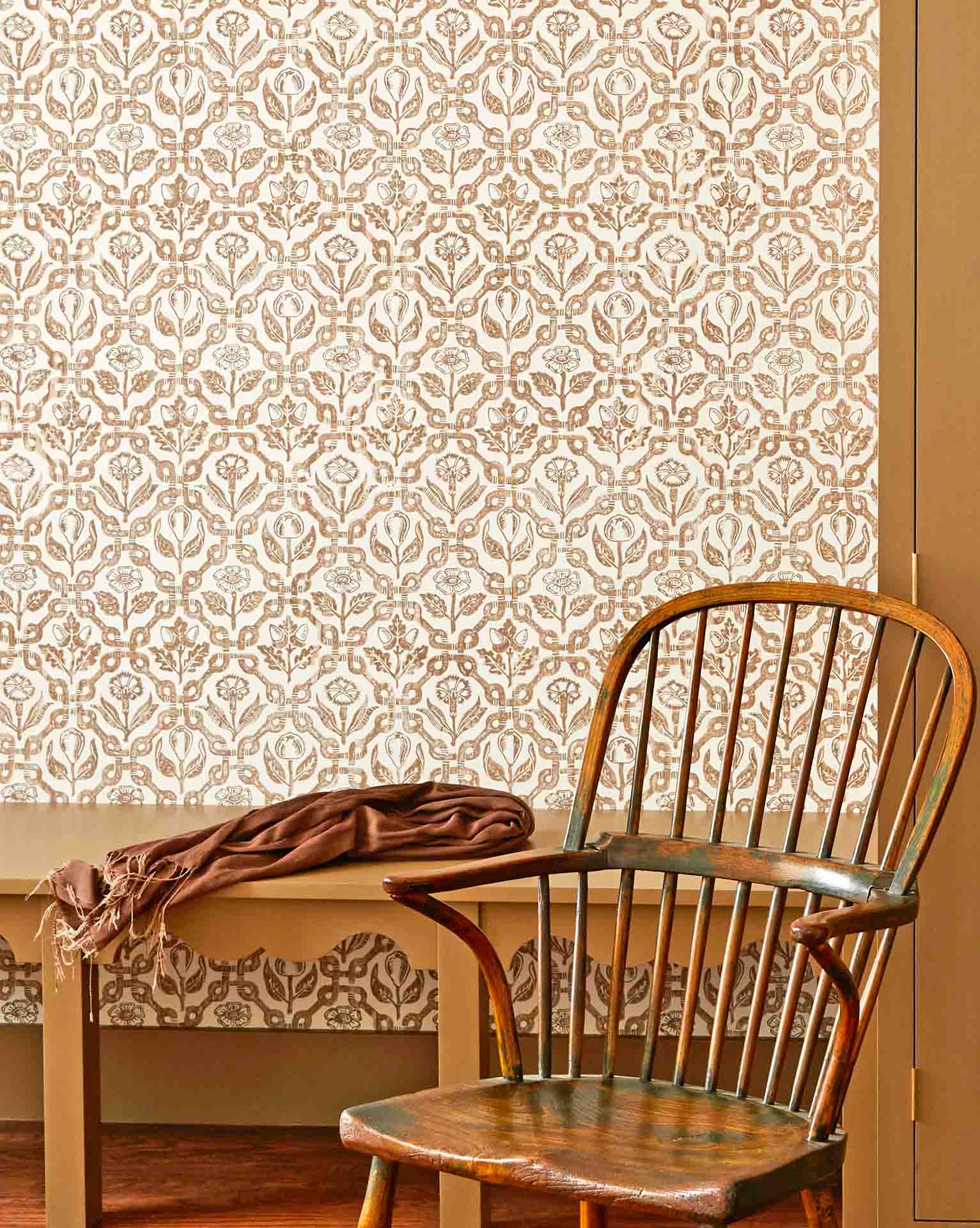
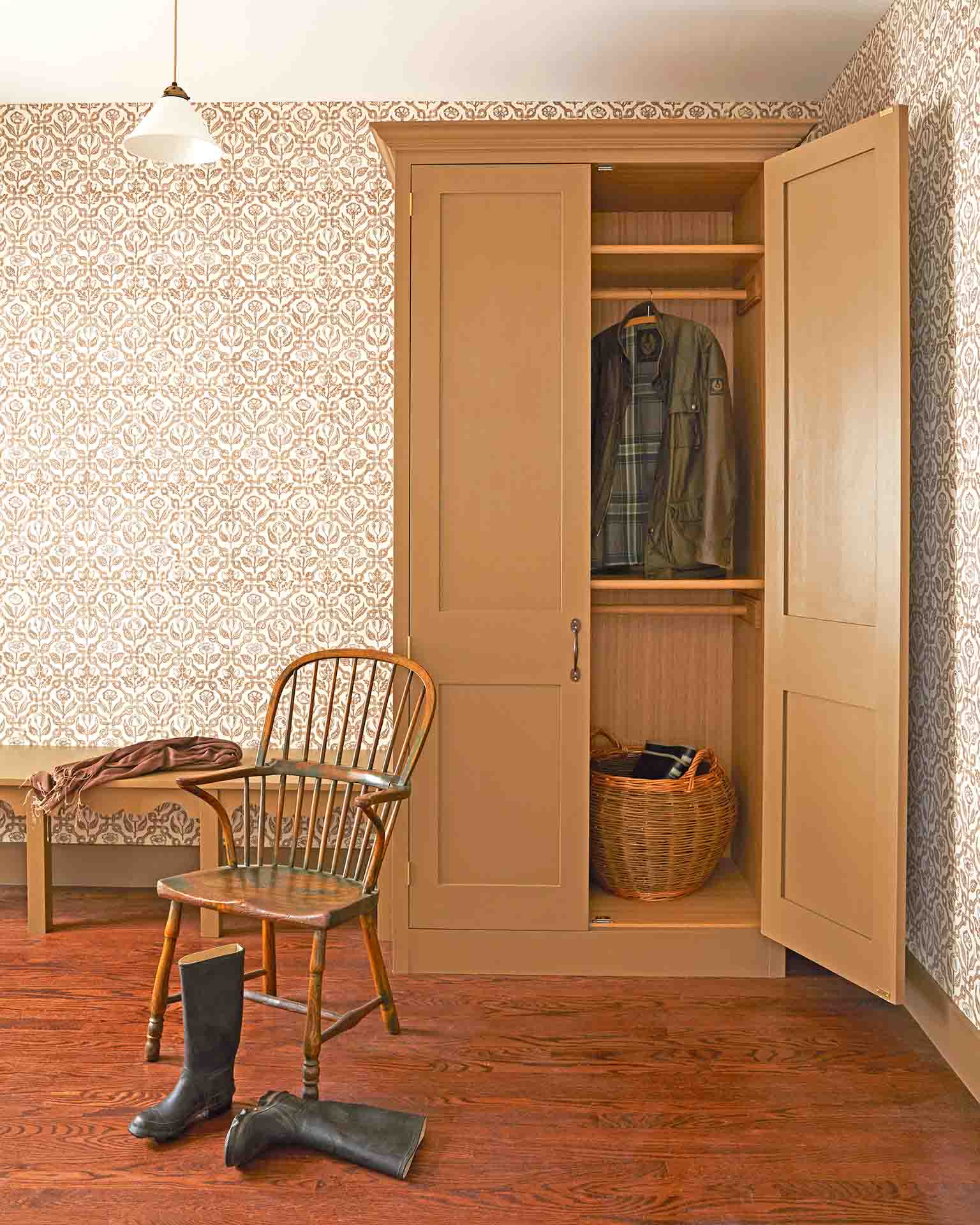
Hand Made Block Printed Wallpaper.
1 block print.
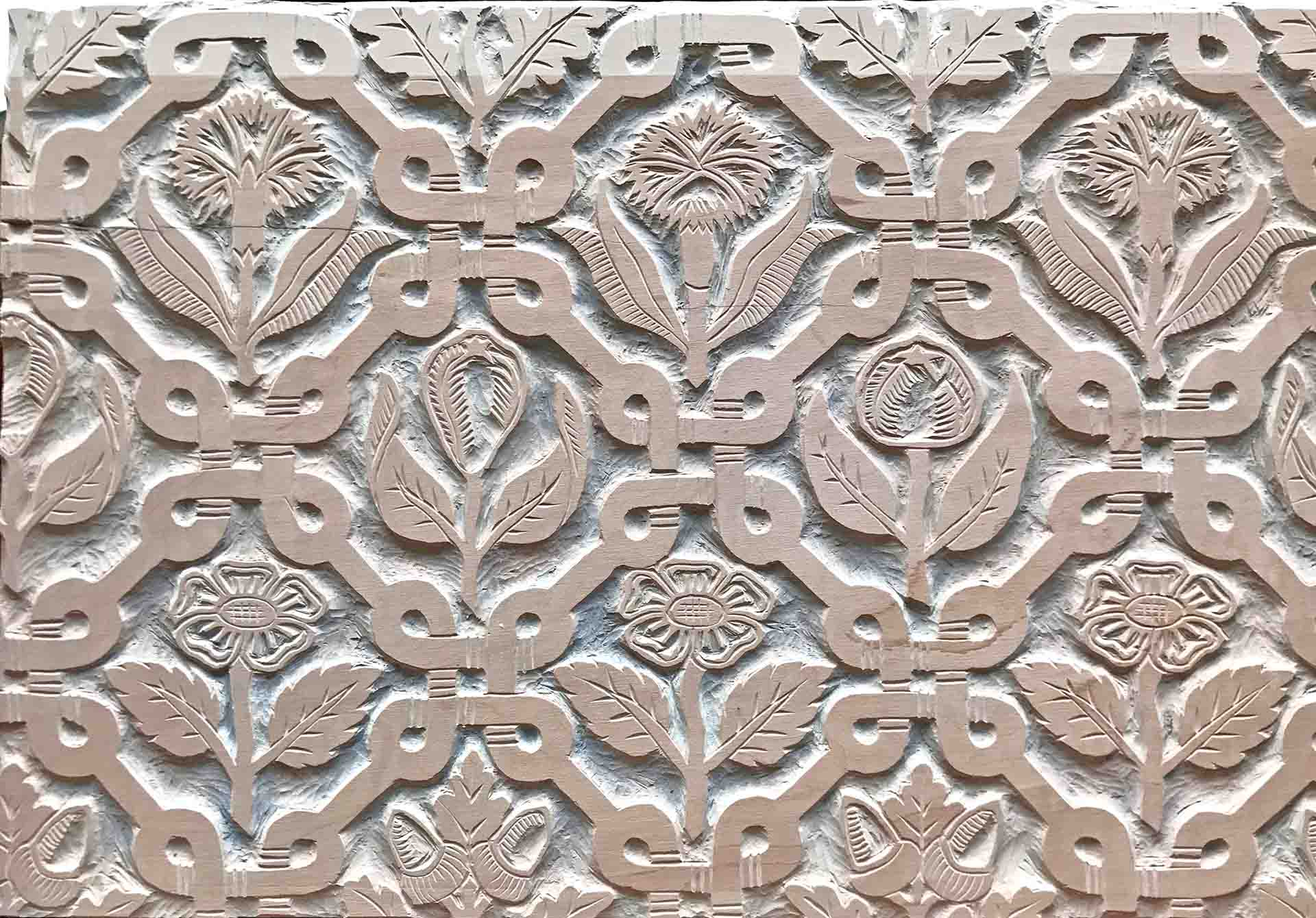
Block printed by hand using hand-carved pear wood blocks, hand-mixed distemper paints, oar press printing on domino paper.
To order a sample please purchase 1 sheet.
All colour schemes are bespoke.
Sheet size: 87 x 47 cm (34¼ x 18½ inches)
£150 per sheet = £365 per m2
Minimum order of 50 sheets covers 20.5m2 = £7500
Enquire
purchase
An exceptional museum-quality recreation from a surviving fragment of circa 1549 domino paper, this hand made wallpaper exemplifies the sophisticated geometric design vocabulary of the late Tudor period. Produced using four hand-carved pear wood blocks and traditional oar press printing methods, Rose Octagon represents a conservation project preserving rare evidence of peak-period dominotier craftsmanship in the Cotswolds workshop of James Randolph Rogers.
About This Design
This exceptional historic wallpaper reproduction recreates an extraordinarily rare circa 1549 acorn pattern using authentic domino paper methods that predate the widespread adoption of wallpaper by nearly two centuries. Acorns represents one of the earliest documented decorative wall covering designs in the European tradition, emerging during the Tudor period when printed papers were still luxury novelties reserved for the most prosperous households and institutional spaces. The acorn motif—symbolising strength, longevity, and divine providence in Tudor iconography—would have carried profound symbolic resonance for mid-16th-century patrons, whether adorning the closets of English manor houses or the private chambers of Continental palaces.
This pattern’s survival into modern scholarship represents a remarkable feat of preservation, as virtually no domino papers from before 1600 have endured intact. The single-block design demonstrates the technical and aesthetic foundations upon which the entire tradition of hand made block printed wallpaper would develop over subsequent centuries. Recreating this pattern demands not merely historical accuracy but deep understanding of pre-industrial printing techniques and materials that had already become obsolete by the Georgian era.
Hand Made Production Method
Each sheet of this bespoke wallpaper is produced entirely by hand using authentic pre-1830s techniques, with additional research into earlier Tudor-era methods. The pattern is block printed from a single hand-carved pear wood printing block, meticulously carved to replicate the distinctive character of mid-16th-century dominotier craftsmanship. This block is carefully inked with hand-mixed distemper paints formulated according to historic recipes using natural pigments and animal glue binders that recreate the characteristic matt surface finish of Renaissance-era decorated papers.
The printing process employs an oar press, applying controlled pressure to transfer the design onto individual sheets measuring 87 x 47 cm (34¼ x 18½ inches). This sheet-by-sheet hand made production method, whilst refined over centuries, preserves the essential techniques that Tudor dominotiers would recognise. The single-block printing approach, economical yet demanding exceptional skill, ensures each sheet retains the authentic irregularities and surface qualities that distinguish genuine historic domino paper from modern reproductions.
Historical Context and Authenticity
The mid-16th century witnessed the earliest experiments with printed decorative papers in Northern Europe, particularly in regions with established textile printing traditions. By 1549, dominotiers in major commercial centres—from London and Antwerp to Lyon and Augsburg—were beginning to adapt woodblock printing techniques from fabric and playing card manufacture to create decorative wall coverings for discerning patrons. These papers remained exceptionally rare and costly, their production limited to specialist craftsmen serving elite clientele.
The acorn motif held particular significance during the Tudor period and Renaissance more broadly. In English contexts, the oak and its fruit symbolised royal authority, endurance, and Protestant steadfastness, whilst across Catholic Europe acorns represented divine providence and the sustaining power of faith. This symbolic richness made acorn patterns appropriate for both secular and ecclesiastical interiors, from the private apartments of aristocratic households to collegiate and monastic spaces.
This historic wallpaper recreation derives from intensive study of surviving 16th-century decorative print techniques and fragmentary evidence of early domino papers. The commitment to authentic hand made manufacture using period-appropriate materials and methods ensures the wallpaper possesses the distinctive surface quality, colour characteristics, and visual texture of genuine Renaissance decorative papers—whether destined for a sensitively restored Tudor property, an academic institution, or a museum installation requiring absolute historical fidelity.
Bespoke Specifications and Ordering
This block printed wallpaper is produced to order on individual sheets measuring 87 x 47 cm (34¼ x 18½ inches), reflecting standard paper dimensions of the period. Pricing is , with a minimum order requirement of Minimum order of 50 sheets covers 20.5m2 = £7500. To order a sample, please purchase 1 sheet.
All bespoke colour schemes are mixed specifically for each commission to suit your interior requirements whilst maintaining period-appropriate authenticity. Historic colour palettes for mid-16th-century decorative papers typically featured earth pigments—ochres, umbers, terre verte greens, and lamp blacks—though more costly colours including verdigris, vermilion, and lead white were occasionally employed for prestigious commissions. Contemporary colour interpretations can be accommodated whilst preserving the characteristic distemper paint surface qualities essential to historical accuracy. Given the specialised nature of this extraordinarily early pattern, advance consultation is recommended to ensure optimal results for your specific conservation or restoration project.
Get In Touch