About This Design
This historic wallpaper reproduction recreates an authentic circa 1830 geometric diamond lattice pattern originally discovered on historic fabric. The design represents the culmination of Georgian domino paper production, when simple geometric patterns achieved remarkable sophistication through precise registration and subtle tonal variation. Diamond lattice motifs enjoyed sustained popularity from the late 18th century through the early 19th century, adorning walls in both modest and fashionable interiors across Britain, Europe, and the American states during the Georgian and Federal periods.
The pattern’s timeless appeal made it particularly suitable for hand made domino wallpaper production, where economical single-block printing could achieve striking visual impact through repetition alone. These geometric designs were favoured for their versatility—equally appropriate for bedchambers, dressing rooms, service areas, and secondary reception rooms—where their ordered regularity provided decorative interest without competing with furnishings or architectural features. The diamond lattice format proved especially enduring, bridging the transition from Georgian formality to emerging Regency tastes.
Hand Made Production Method
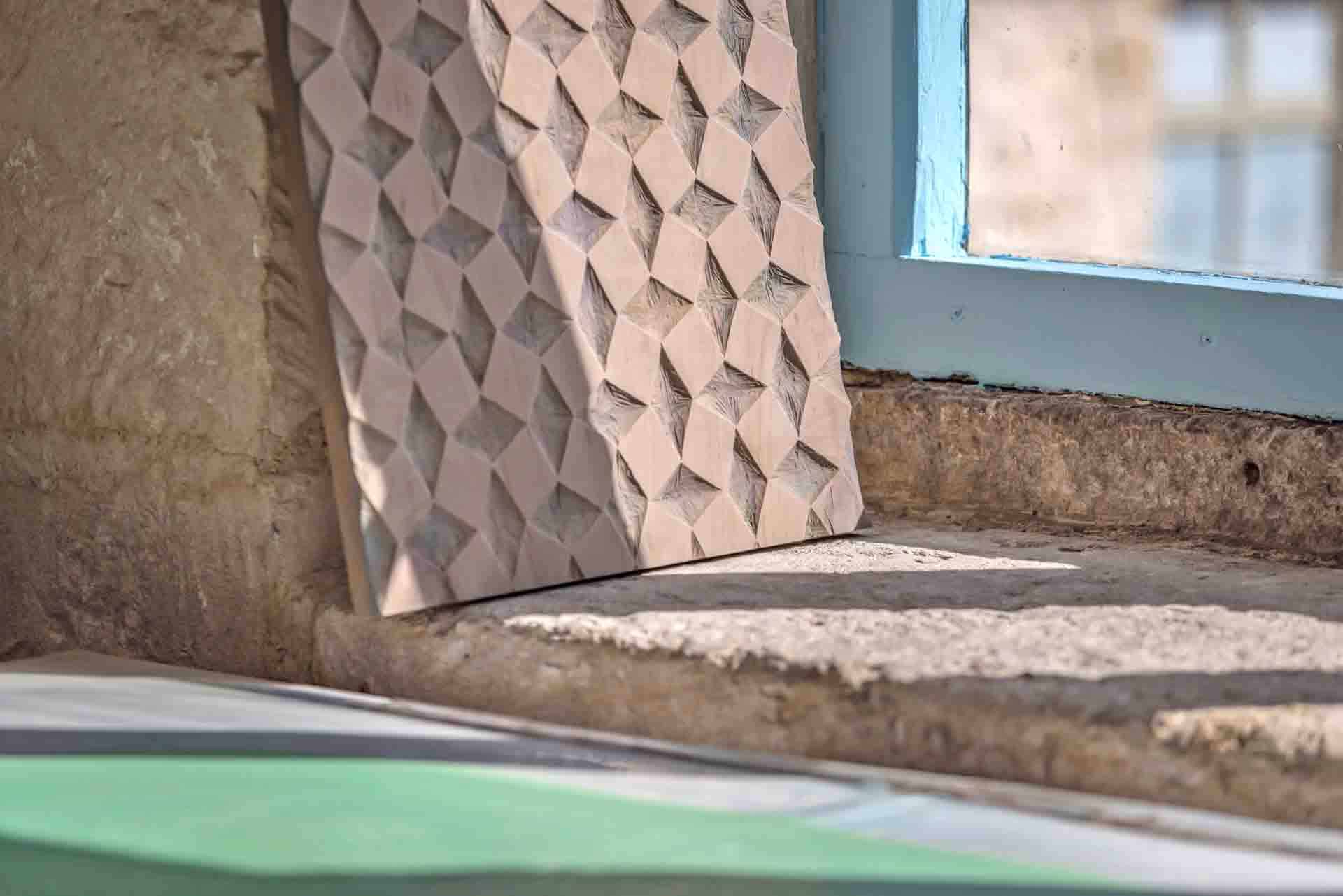
Each sheet of this bespoke wallpaper is produced entirely by hand using authentic pre-1830s techniques unchanged since the Georgian period. The pattern is block printed from a single hand-carved pear wood printing block, precisely cut to ensure crisp definition and accurate registration across repeated impressions. This block is carefully inked with hand-mixed distemper paints, formulated according to historic recipes using natural pigments and animal glue binders that replicate the characteristic matt surface and subtle colour depth of genuine 18th and early 19th-century wallpapers.
The printing process employs an oar press, applying controlled, even pressure to transfer the geometric design onto individual sheets measuring 81 x 52 cm (32 x 20½ inches). This sheet-by-sheet hand made production method ensures each length retains the authentic character and subtle variations inherent to historic domino papers. The single-block printing technique, whilst economical, demands considerable skill to maintain consistent alignment and colour saturation—particularly critical with geometric patterns where any registration imperfections become immediately apparent.
Historical Context and Authenticity
Diamond lattice patterns flourished throughout the Georgian and Federal periods, appearing in domestic interiors from London and Bath to New England and the Mid-Atlantic states. The geometric simplicity of these designs made them accessible to a broad market—from prosperous merchants and professional classes to rural gentry—who sought affordable yet respectable wall decoration for multiple rooms. Original examples discovered in historic houses frequently show these papers in bedchambers, closets, and service areas, though grander versions with additional colours or gilding occasionally adorned principal rooms.
This historic wallpaper recreation derives directly from fabric evidence dating to circa 1830, representing authentic late Georgian production at the cusp of emerging Victorian tastes. The commitment to traditional hand made manufacture ensures the wallpaper possesses the distinctive surface quality, colour characteristics, and visual texture of genuine period domino wallpaper, whether destined for a Georgian townhouse, a Regency cottage, a Federal-era residence, or a sympathetic conservation project requiring documented historical accuracy.
Bespoke Specifications and Ordering
This block printed wallpaper is produced to order on individual sheets measuring 81 x 52 cm (32 x 20½ inches), reflecting standard crown format paper dimensions of the period. Pricing is , with a minimum order requirement of Minimum order of 50 sheets covers 21 m² = £5000.
All bespoke colour schemes are mixed specifically for each commission to complement your interior requirements. Historic colour palettes for geometric patterns typically featured warm earth tones, soft terracotta grounds, muted greens, and cooler grey-blues, though contemporary colour interpretations can be accommodated whilst maintaining period-appropriate distemper paint characteristics and matt finish. Volume orders exceeding 100 sheets receive a 20% discount, making larger restoration projects or multiple-room installations more economical whilst maintaining uncompromising quality and historical authenticity.