About This Design
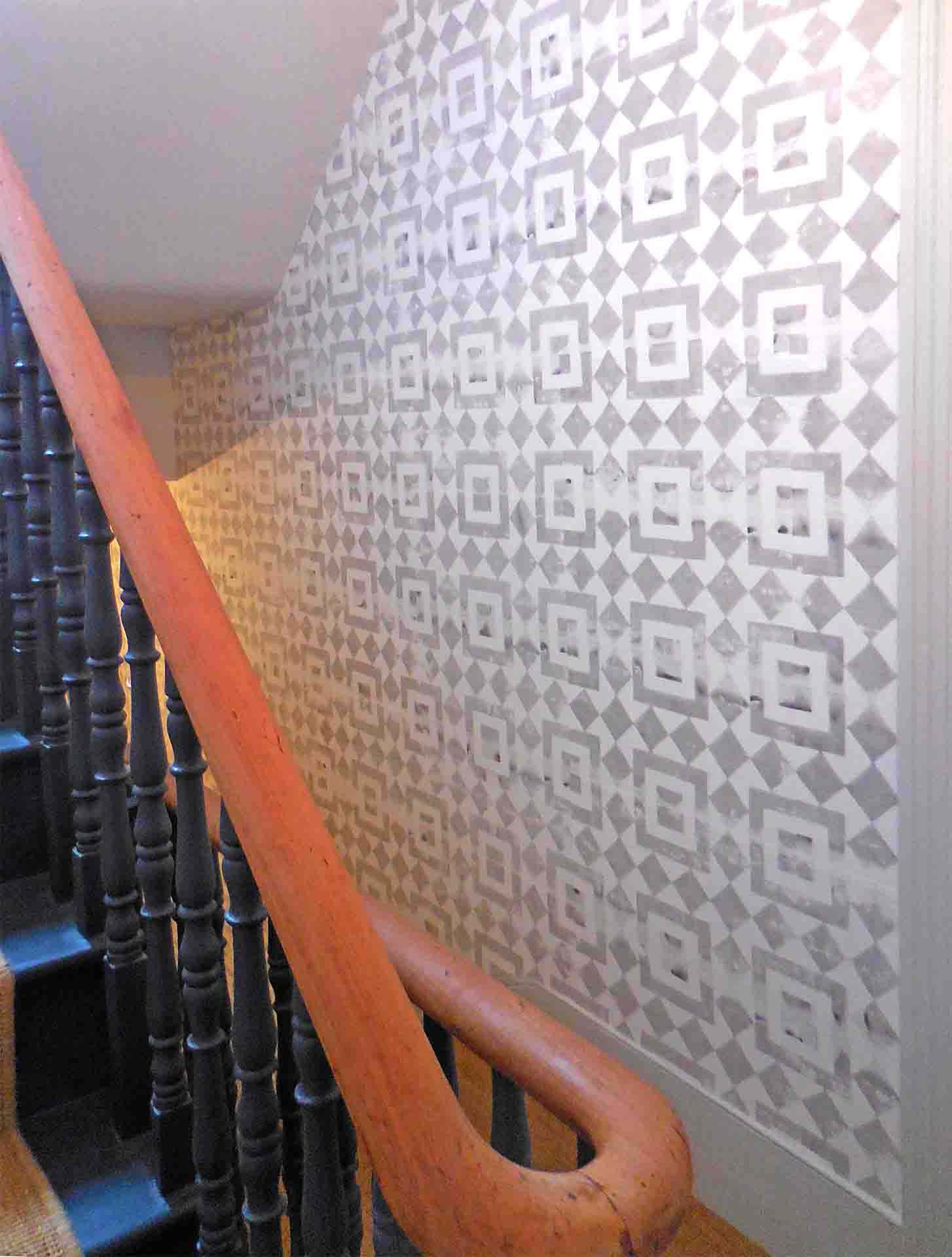
This historic wallpaper reproduction recreates an authentic circa 1700 geometric tile pattern derived from original Moroccan tilework, representing one of the earliest examples of Islamic geometric design adapted for European domino paper production. The pattern exemplifies the remarkable cultural exchange occurring during the early Georgian period, when exotic motifs from North Africa and the Eastern Mediterranean captivated British and European decorative sensibilities. These geometric tile patterns, with their precise mathematical construction and interlocking forms, offered an sophisticated alternative to the naturalistic florals that dominated early 18th-century wallpaper production.
The enduring appeal of Moroccan geometric designs made them ideal subjects for hand made domino wallpaper, where the crisp lines and repeating patterns could be achieved through skilled single-block printing. Such papers were particularly fashionable in merchant households and amongst collectors who appreciated exotic design vocabularies, appearing in studies, libraries, and withdrawing rooms where their architectural character complemented panelled interiors. Original examples from this period are exceptionally rare, making authenticated reproductions essential for historic house conservation and period-appropriate restoration projects.
Hand Made Production Method
Each sheet of this bespoke wallpaper is produced entirely by hand using authentic pre-1830s techniques unchanged since the early Georgian period. The pattern is block printed from a single hand-carved pear wood printing block, meticulously carved to capture the precise geometric interlocking characteristic of Moroccan tile design. This block is carefully inked with hand-mixed distemper paints formulated according to historic recipes using natural pigments and animal glue binders that replicate the distinctive matt surface quality of early 18th-century wallpapers.
The printing process employs an oar press, applying controlled, even pressure to transfer the design onto individual sheets measuring 77.5 x 50 cm (30½ x 19¾ inches). This sheet-by-sheet hand made production method ensures each length retains the subtle variations and authentic character inherent in historic domino papers. The single-block technique, whilst economical, demands exceptional skill to maintain the sharp geometric registration and consistent colour saturation essential to this pattern’s architectural impact.
Historical Context and Authenticity
Geometric tile patterns inspired by Islamic and Moroccan design traditions began appearing in European wallpaper production during the late 17th and early 18th centuries, coinciding with increased trade and cultural contact through Mediterranean ports. In Britain, such patterns found favour amongst prosperous merchants in London, Bristol, and port cities who maintained trading connections with North Africa and the Levant. Across the Atlantic, similar geometric motifs appeared in the American colonies, particularly in cosmopolitan centres like Philadelphia and Charleston where international trade fostered appreciation for exotic design sources.
This historic wallpaper recreation derives from careful study of circa 1700 tilework examples and early domino paper fragments, maintaining both the technical production methods and the aesthetic precision of the period. The commitment to authentic hand made manufacture ensures the wallpaper possesses the distinctive surface texture, colour depth, and visual character of genuine early Georgian domino wallpaper, whether destined for a Queen Anne townhouse, a merchant’s residence, or a William and Mary-era interior.
Bespoke Specifications and Ordering
This block printed wallpaper is produced to order on individual sheets measuring 77.5 x 50 cm (30½ x 19¾ inches), a format reflecting standard early Georgian paper dimensions. Pricing is , with a minimum order requirement of Minimum order of 50 sheets covers 19.4 m² = £5000.
All bespoke colour schemes are mixed specifically for each commission to suit your interior requirements. Historic colour palettes for geometric tile patterns typically featured deep indigos, rich terracotta reds, warm ochres, and earthy umbers that echoed authentic Moroccan tile glazes, though contemporary colour interpretations can be accommodated whilst maintaining period-appropriate distemper paint characteristics. Volume orders exceeding 100 sheets receive a 20% discount, making larger conservation projects and comprehensive interior schemes more economical whilst maintaining uncompromising quality and authenticity.