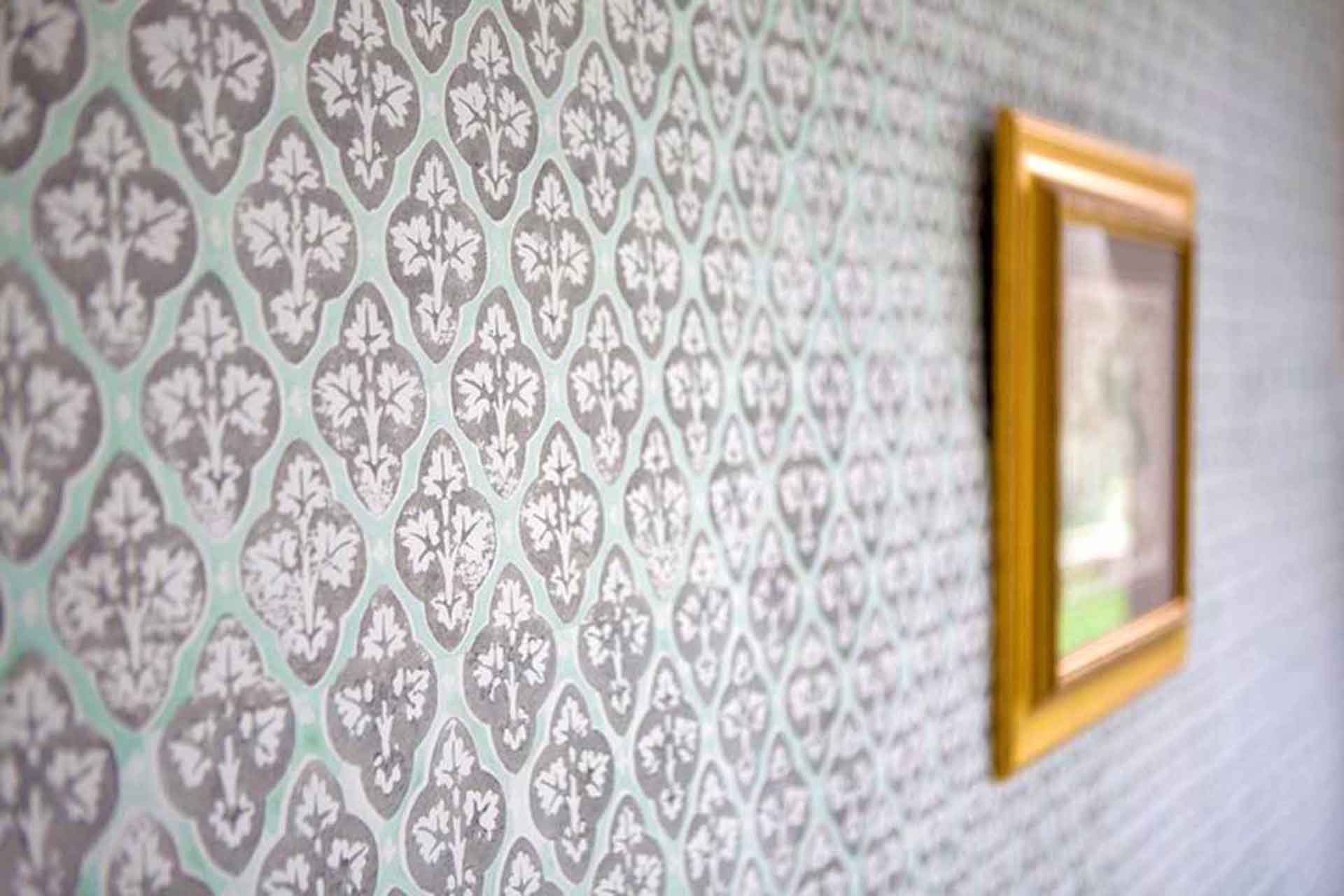
Smoking Room. Circa 1750.

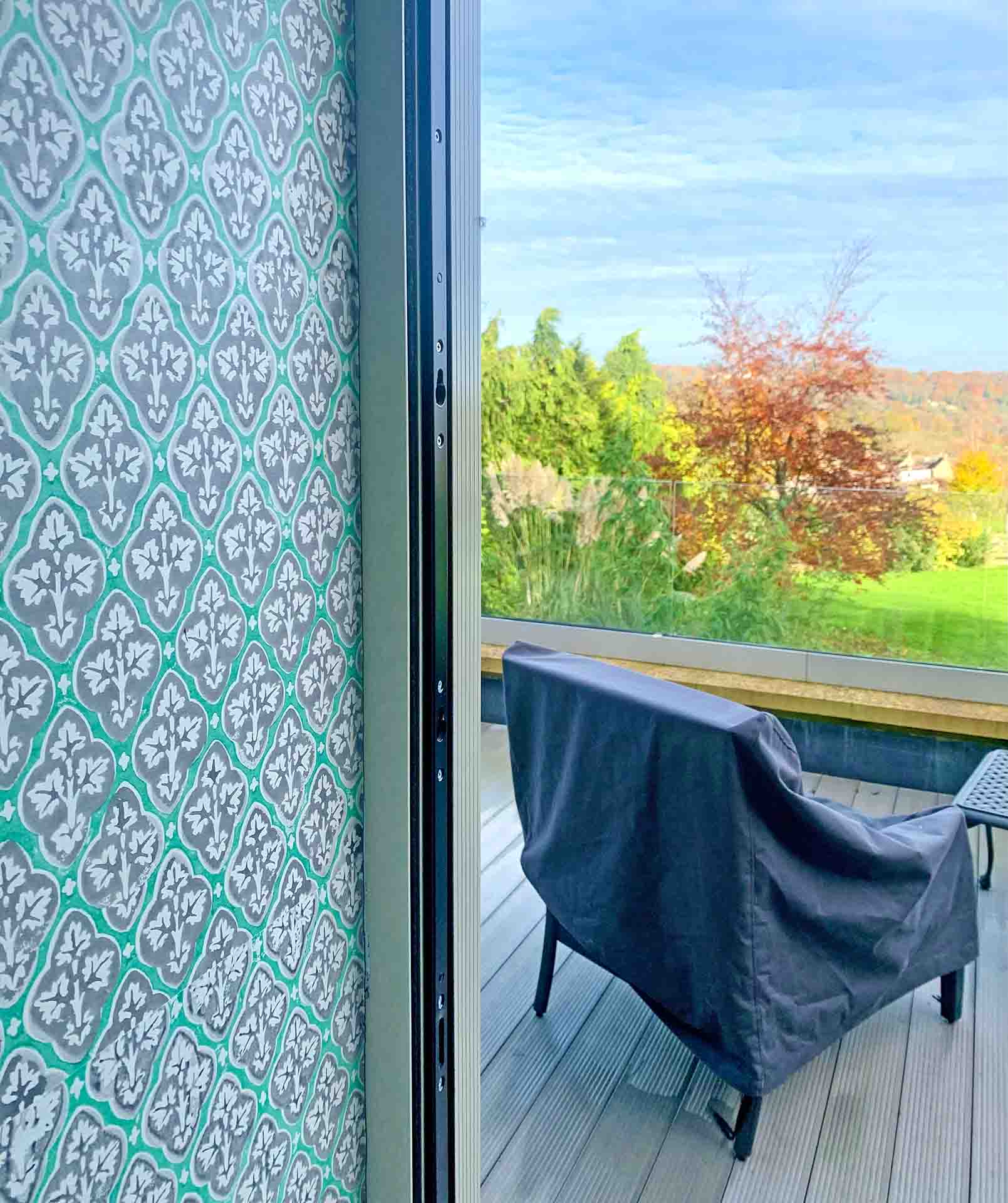
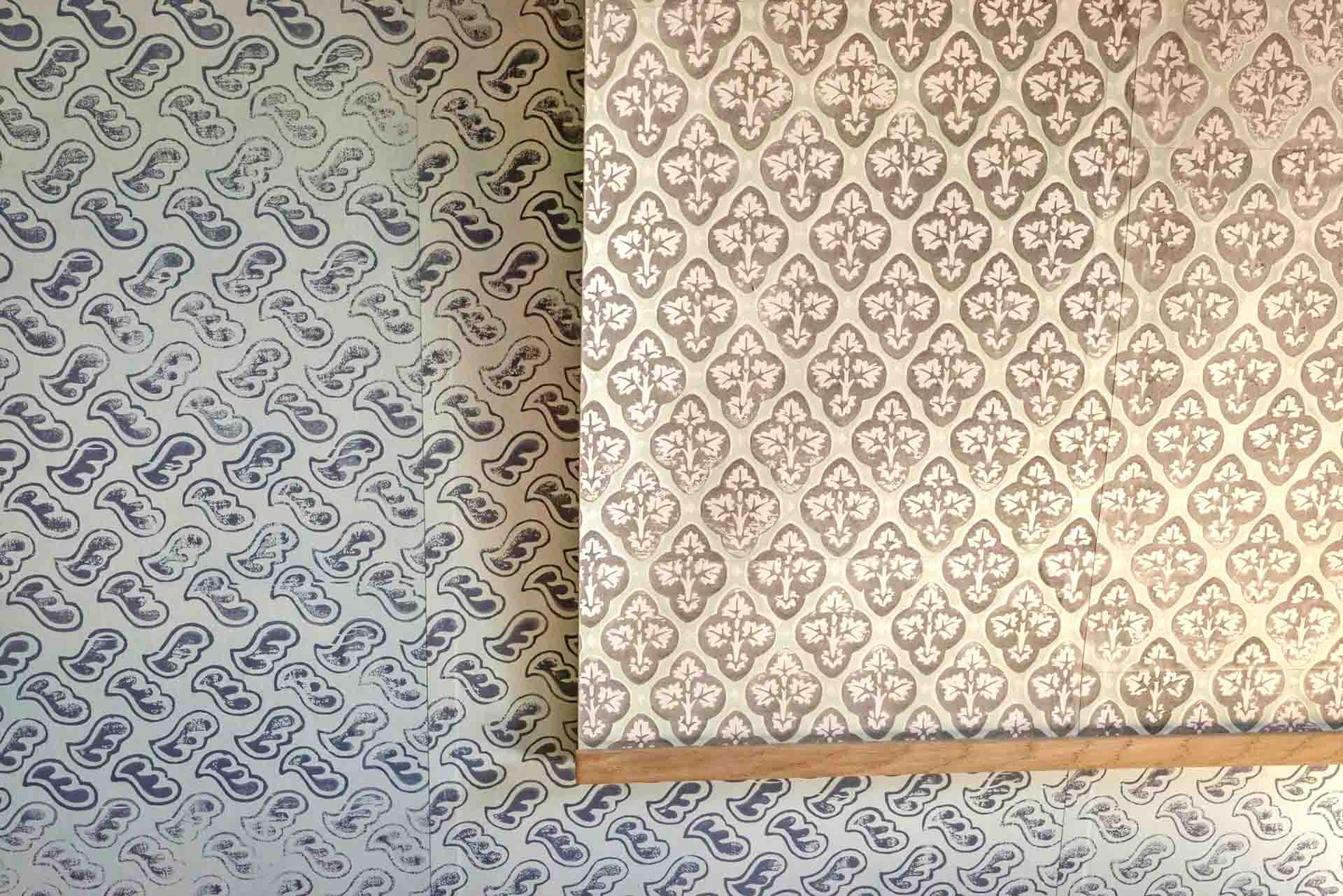
Hand Made Block Printed Wallpaper.
2 block print.
Block printed by hand using hand-carved pear wood blocks, hand-mixed distemper paints, oar press printing on domino paper.
To order a sample please purchase 1 sheet.
All colour schemes are bespoke.
Sheet size: 76 x 52.5 cm (30 x 20¾ inches)
£140 per sheet = £350 per m²
Minimum order of 50 sheets covers 19.9 m² = £7000
Enquire
purchase
An authentic recreation of a circa 1750 Geometric tile pattern, this hand made domino wallpaper exemplifies the restrained elegance of Georgian / Federal (USA) design. Produced using traditional block printing methods with hand-carved pear wood blocks and historic distemper paint recipes, each sheet is printed individually on an oar press in the Cotswolds workshop of James Randolph Rogers.
About This Design
This historic wallpaper reproduction recreates an authentic circa 1800 geometric tile pattern using traditional domino paper methods unchanged since the Georgian period. Originally discovered as a historic tile fragment, this design represents the sophisticated geometric aesthetic that flourished during the late 18th and early 19th centuries, when architectural precision and mathematical order defined fashionable interior decoration. Such tile-effect wallpapers were particularly favoured in masculine spaces—libraries, smoking rooms, billiard rooms, and gentlemen’s studies—where their structured formality complemented panelled wainscoting and scholarly pursuits.
The pattern’s geometric rigour made it ideal for progressive townhouses in London and Bristol, as well as Federal-era residences in Boston, Philadelphia, and Baltimore, where Enlightenment ideals of rational design found expression in domestic interiors. These papers offered an economical alternative to genuine ceramic tiles whilst maintaining visual impact through careful chromatic balance and precise registration. The two-block printing technique allowed for sophisticated colour layering, creating depth and dimension that elevated these papers beyond simple flat decoration.
Hand Made Production Method
Each sheet of this bespoke wallpaper is produced entirely by hand using authentic pre-1830s techniques. The pattern is block printed from two hand-carved pear wood printing blocks—the traditional medium favoured by Georgian dominotiers for its fine grain and exceptional durability under repeated pressure. These blocks are carefully inked with hand-mixed distemper paints, formulated according to historic recipes using natural pigments and animal glue binders that replicate the characteristic matt finish and subtle tonal variations of late 18th-century wallpapers.
The printing process employs an oar press, applying even, controlled pressure to transfer each colour layer onto individual sheets measuring 76 x 52.5 cm (30 x 20¾ inches). This sheet-by-sheet hand made production method, unchanged since the Georgian period, ensures each length retains the subtle surface texture and authentic character of historic domino papers. The two-block printing technique demands considerable skill to achieve precise registration between colour layers, with each block requiring careful alignment to maintain the geometric integrity essential to tile patterns.
Historical Context and Authenticity
Geometric tile patterns flourished across Georgian Britain and Federal America during the late 18th and early 19th centuries, when neoclassical design principles emphasised mathematical proportion and architectural order. The popularity of these papers reflected broader cultural movements—the Grand Tour’s influence on British taste, Robert Adam’s geometric ceiling designs, and the American republic’s embrace of Roman civic virtues expressed through classical motifs. Original examples discovered in historic houses from Bath to Charleston frequently show these papers in masculine reception rooms, where their structured formality reinforced spaces designated for business, scholarship, and masculine sociability.
This historic wallpaper recreation derives from careful study of an original circa 1800 tile fragment, maintaining both the technical production methods and the aesthetic sensibilities of the period. The commitment to authentic hand made manufacture using two printing blocks ensures the wallpaper possesses the distinctive surface quality, colour depth, and precise registration characteristic of genuine Georgian domino wallpaper, whether destined for a Regency townhouse, a Georgian country estate, or a Federal-era residence requiring historically appropriate interior decoration.
Bespoke Specifications and Ordering
This block printed wallpaper is produced to order on individual sheets measuring 76 x 52.5 cm (30 x 20¾ inches), reflecting historic paper dimensions of the Georgian period. Pricing is , with a minimum order requirement of Minimum order of 50 sheets covers 19.9 m² = £7000.
All bespoke colour schemes are mixed specifically for each commission to suit your interior requirements. Historic colour palettes for geometric tile patterns typically employed strong chromatic contrasts—Prussian blues against terracotta grounds, terre verte with burnt umber accents, or classical stone greys with black detailing—though contemporary colour interpretations can be accommodated whilst maintaining period-appropriate distemper paint characteristics. Volume orders exceeding 100 sheets receive a 20% discount, making larger projects more economical whilst maintaining uncompromising quality and authenticity.
Get In Touch