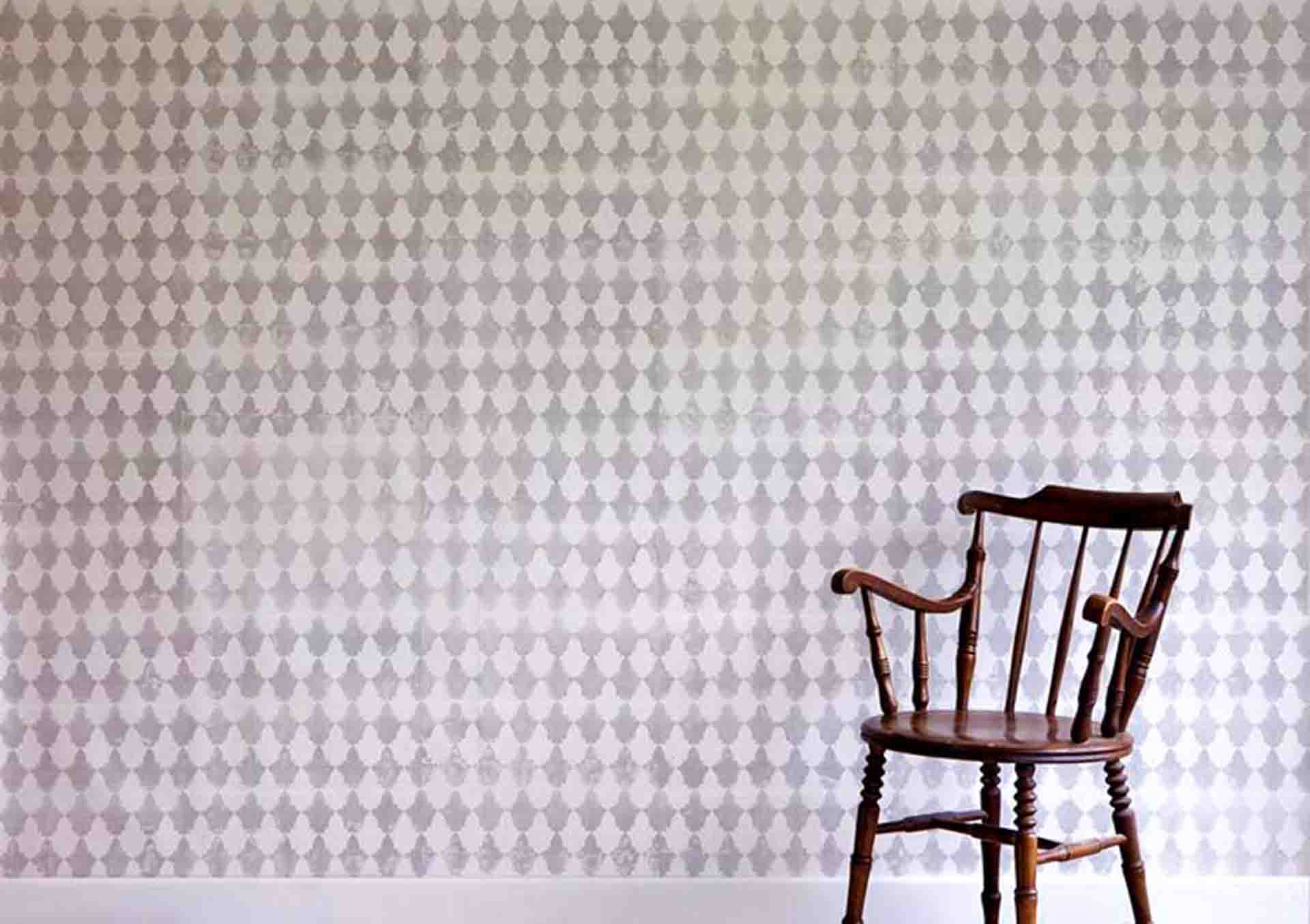
Tessallation. Circa 1800.
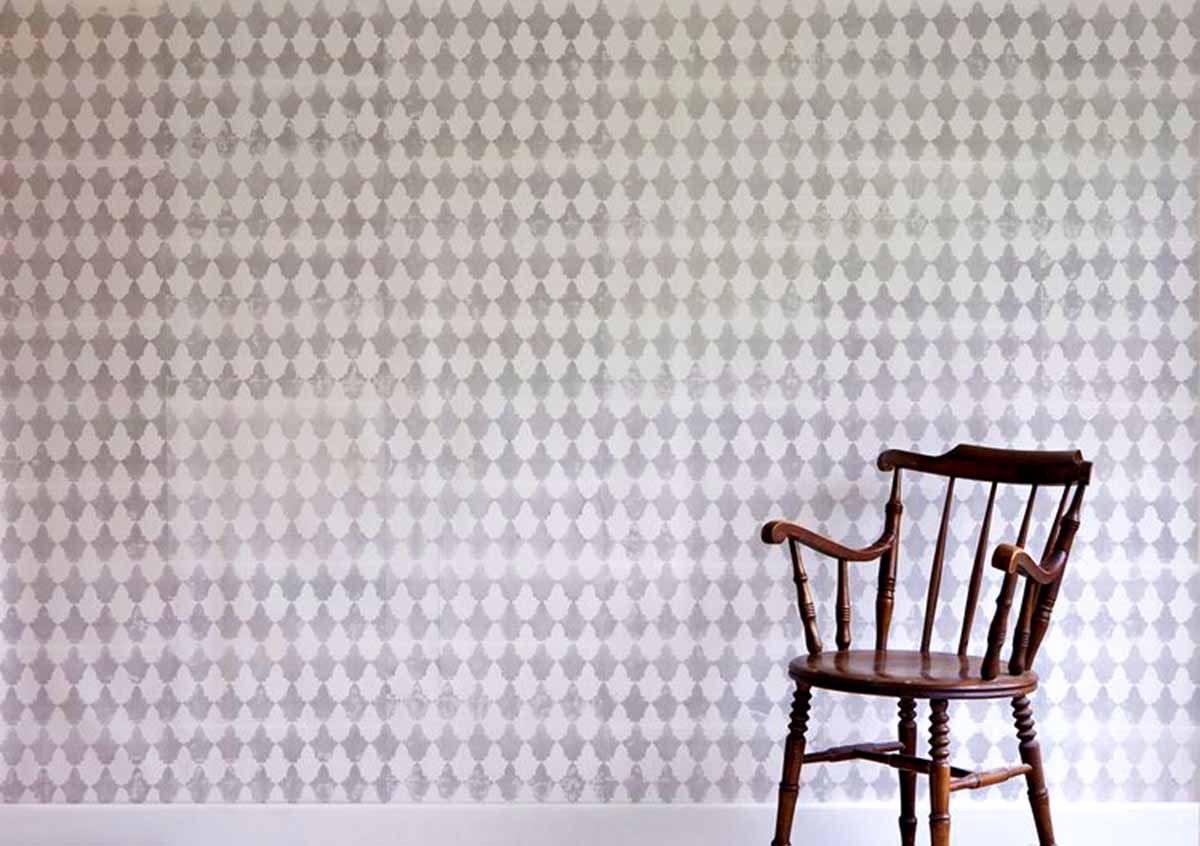
Hand Made Block Printed Wallpaper.
1 block print.
Block printed by hand using hand-carved pear wood blocks, hand-mixed distemper paints, oar press printing on domino paper.
To order a sample please purchase 1 sheet.
All colour schemes are bespoke.
Sheet size: 72.5 x 49 cm (28½ x 19¼ inches)
£110 per sheet = £308 per m²
Minimum order of 50 sheets covers 17.75 m² = £5500
Enquire
purchase
This geometric tessellation pattern represents one of the most architecturally sophisticated designs in the Georgian domino paper repertoire. Adapted from ceramic tile installations popular throughout Britain and Europe circa 1800, this hand made block printed wallpaper demonstrates the mathematical precision and neoclassical discipline that characterised late Georgian and Federal-period decorative arts
About This Design
This historic wallpaper reproduction recreates an authentic circa 1800 geometric tessellation pattern derived from original ceramic tile designs, using traditional domino paper methods unchanged since the Georgian period. Tessellation represents a fascinating intersection of architectural ornament and wallpaper manufacture, when craftsmen adapted the mathematical precision of tiled floors and decorative tilework for application to walls throughout Britain, Europe, and the emerging American republic. These geometric patterns flourished from approximately 1780 through 1820, offering an economical alternative to expensive ceramic installations whilst maintaining visual sophistication in both fashionable townhouses and more modest domestic settings.
The pattern’s enduring appeal lay in its architectural integrity—the interlocking geometric forms created visual rhythm and spatial definition without the elaborate naturalism of swag-and-festoon designs or the delicate complexity of floral sprigs. Hand made domino wallpaper production proved ideally suited to geometric patterns, where single-block printing could achieve consistent registration and crisp edges essential to maintaining the tessellation’s mathematical precision. Such designs appeared throughout Georgian Britain—from London drawing rooms to provincial assembly halls—and crossed the Atlantic to Federal-era homes in Philadelphia, Boston, and the coastal cities of the Mid-Atlantic states.
Hand Made Production Method
Each sheet of this bespoke wallpaper is produced entirely by hand using authentic pre-1830s techniques. The tessellation pattern is block printed from a single hand-carved pear wood printing block—the traditional medium favoured by Georgian dominotiers for its exceptional ability to hold fine linear detail and maintain sharp edges across thousands of impressions. This block is carefully inked with hand-mixed distemper paints, formulated according to historic recipes using natural pigments and animal glue binders that replicate the characteristic matt surface and colour saturation of 18th-century wallpapers.
The printing process employs an oar press, applying even, controlled pressure to transfer the geometric design onto individual sheets measuring 72.5 x 49 cm (28½ x 19¼ inches). This sheet-by-sheet hand made production method, unchanged since the Georgian period, demands considerable skill to achieve the precise registration essential for geometric patterns—any misalignment would compromise the tessellation’s visual integrity across multiple sheets. The single-block printing technique, whilst economical, requires exceptional craftsmanship to maintain consistent ink coverage and pattern alignment throughout extended production runs.
Historical Context and Authenticity
Geometric tessellation patterns enjoyed widespread popularity across Georgian Britain and Federal America during the late 18th and early 19th centuries. The architectural character of these designs made them particularly suitable for entrance halls, stair passages, and formal reception rooms—spaces where geometric discipline complemented classical proportions and architectural detailing. Original examples discovered in historic houses frequently show these papers used to create visual continuity between tiled floors and plastered walls, establishing coherent decorative schemes that respected neoclassical principles of order and proportion.
This historic wallpaper recreation derives from careful study of original ceramic tile designs documented in circa 1800 pattern books and surviving architectural installations. The adaptation of tilework to domino paper represents an important aspect of Georgian decorative arts, demonstrating how craftsmen translated three-dimensional architectural ornament into two-dimensional printed media whilst maintaining design integrity. The commitment to authentic hand made manufacture ensures the wallpaper possesses the distinctive surface quality, colour depth, and visual texture characteristic of genuine Georgian domino wallpaper, whether destined for a Regency terrace, a country house, or a Federal-period residence.
Bespoke Specifications and Ordering
This block printed wallpaper is produced to order on individual sheets measuring 72.5 x 49 cm (28½ x 19¼ inches), reflecting the standard dimensions of Georgian-era domino papers. Pricing is , with a minimum order requirement of Minimum order of 50 sheets covers 17.75 m² = £5500.
All bespoke colour schemes are mixed specifically for each commission to suit your interior requirements. Historic colour palettes for geometric patterns typically featured strong tonal contrasts—deep Prussian blues against stone grounds, black or dark green tessellations on buff or cream backgrounds, or terracotta and ochre combinations—though contemporary colour interpretations can be accommodated whilst maintaining period-appropriate distemper paint characteristics. Volume orders exceeding 100 sheets receive a 20% discount, making larger architectural projects more economical whilst maintaining uncompromising quality and authenticity.
Get In Touch